Agri Food Discovery Centre Illustrated Axo Jarrell

Cultivating Place: A “Rooted” Design for Canada's New Agricultural Science Centre

Discover our landscape-led agri-food centre, blending local heritage with global ambition.

Scroll

Recently, we have had the privilege of partnering with Ontario’s Studio Dyer to envision a new future for the Huron Perth Agricultural Science Centre. This collaboration has sparked a deeper conversation within our studio: How do we design for the future of food in a way that honours the past?
Agriculture is the oldest story we share. It forms the roots of our cities and provides the pulse of our seasons, acting as a cultural force that binds together human innovation and the natural world.

At Studio Egret West, we have long been fascinated by the intersection of food systems, urbanism, and narrative. From our Food for Thought exhibition to our ongoing work reimagining the historic Smithfield Market, we believe that spaces dedicated to food possess rich narratives waiting to be unearthed. To be truly meaningful, these designs must be deeply rooted—anchoring the future of innovation in the soils of local identity.

In this article, we share our perspective on designing a modern agricultural technology centre that is local, global, and deeply rooted.

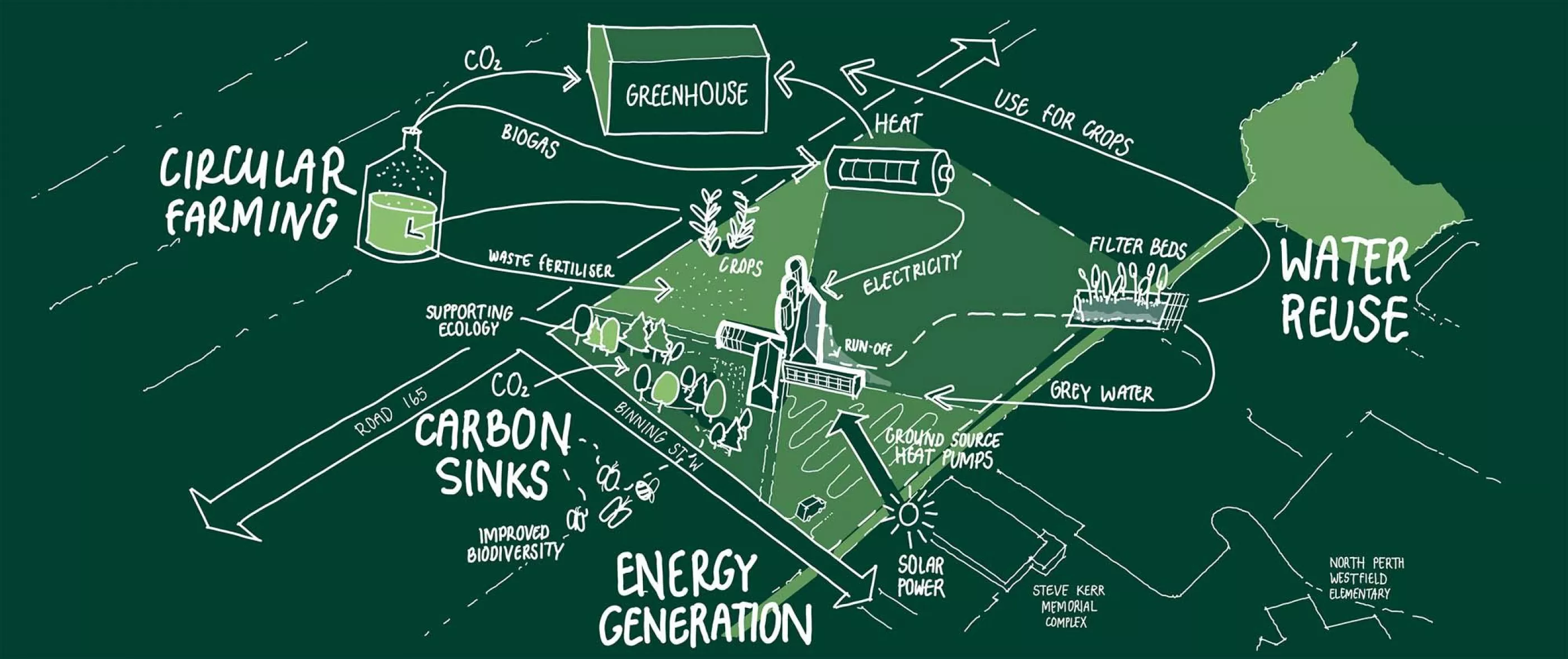
Sustainability Diagram

1. Reinterpreting the Vernacular

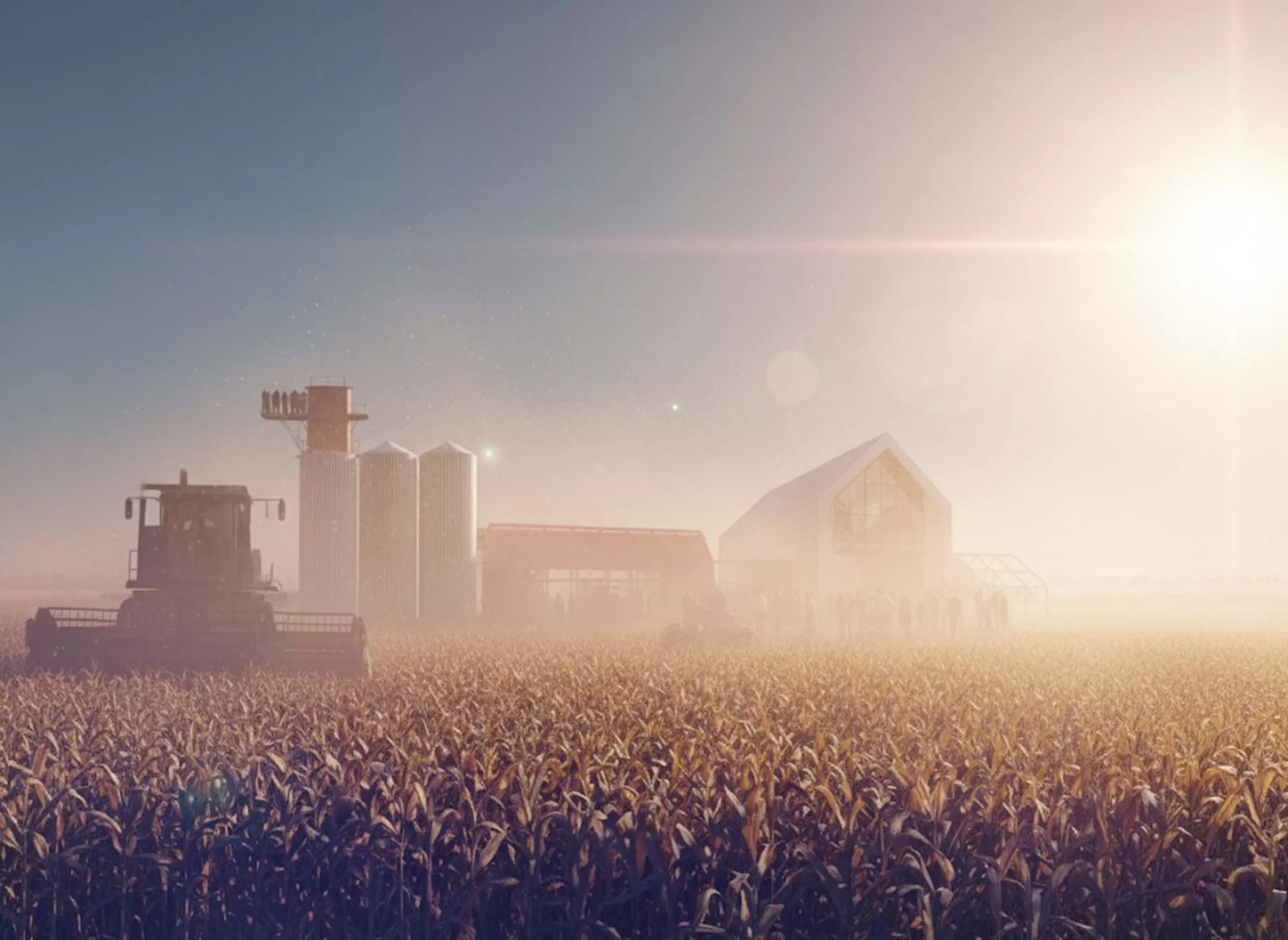
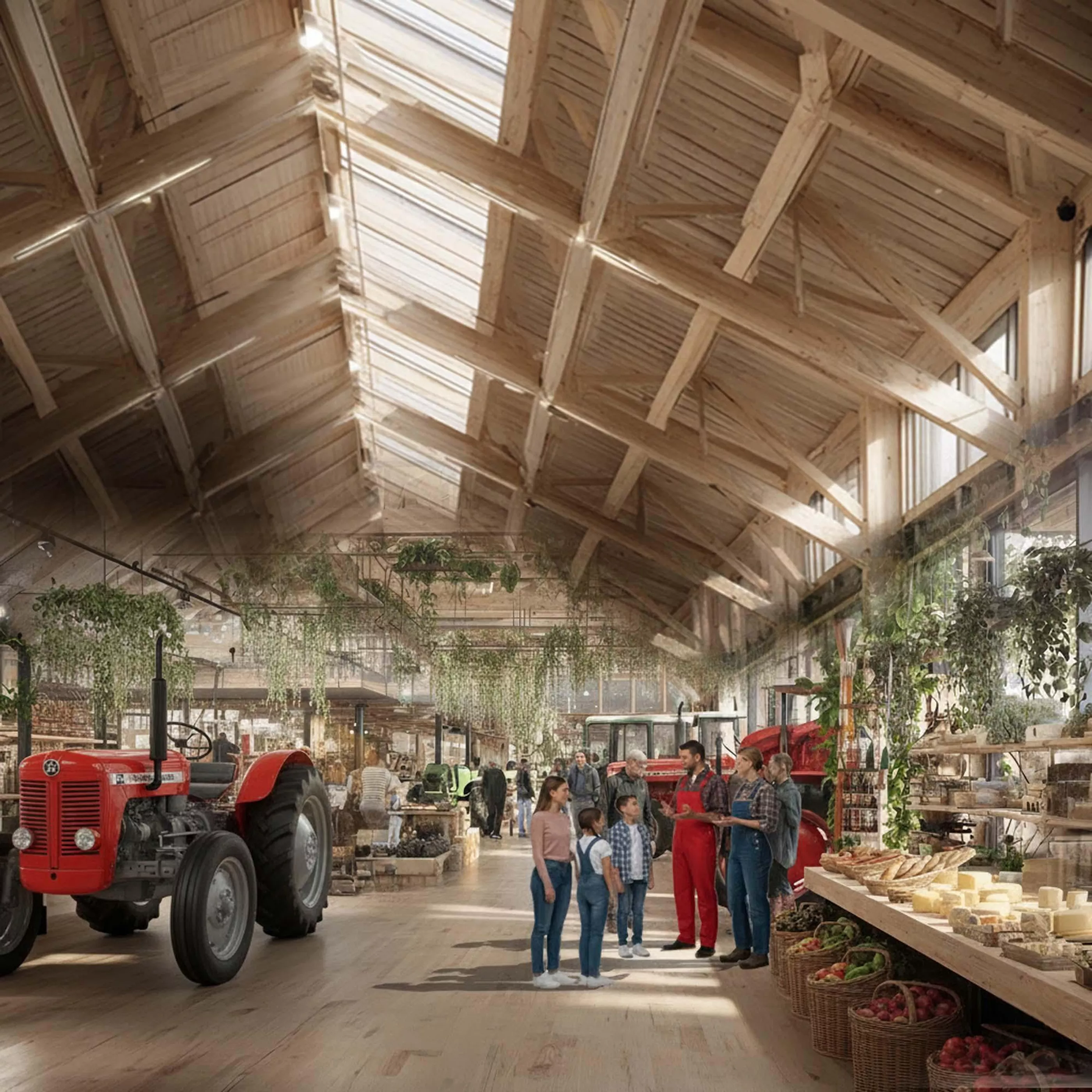
There is an inherent beauty and honesty in the agricultural vernacular. The silo, the barn, the greenhouse—these are forms born of necessity, optimized for storage, ventilation, and growth. Our approach for the design of the Agricultural Science Centre was driven by a desire to reinterpret these familiar forms rather than erase them.

Reuse, Re-work, Recycle: We view the existing site as a resource, not a blank slate. We look to implement the latest in sustainable building practice, while exploring material re-use from old structures such as barns and silos. By adopting these traditional techniques, we can help pass historic skilled trades to future generations.

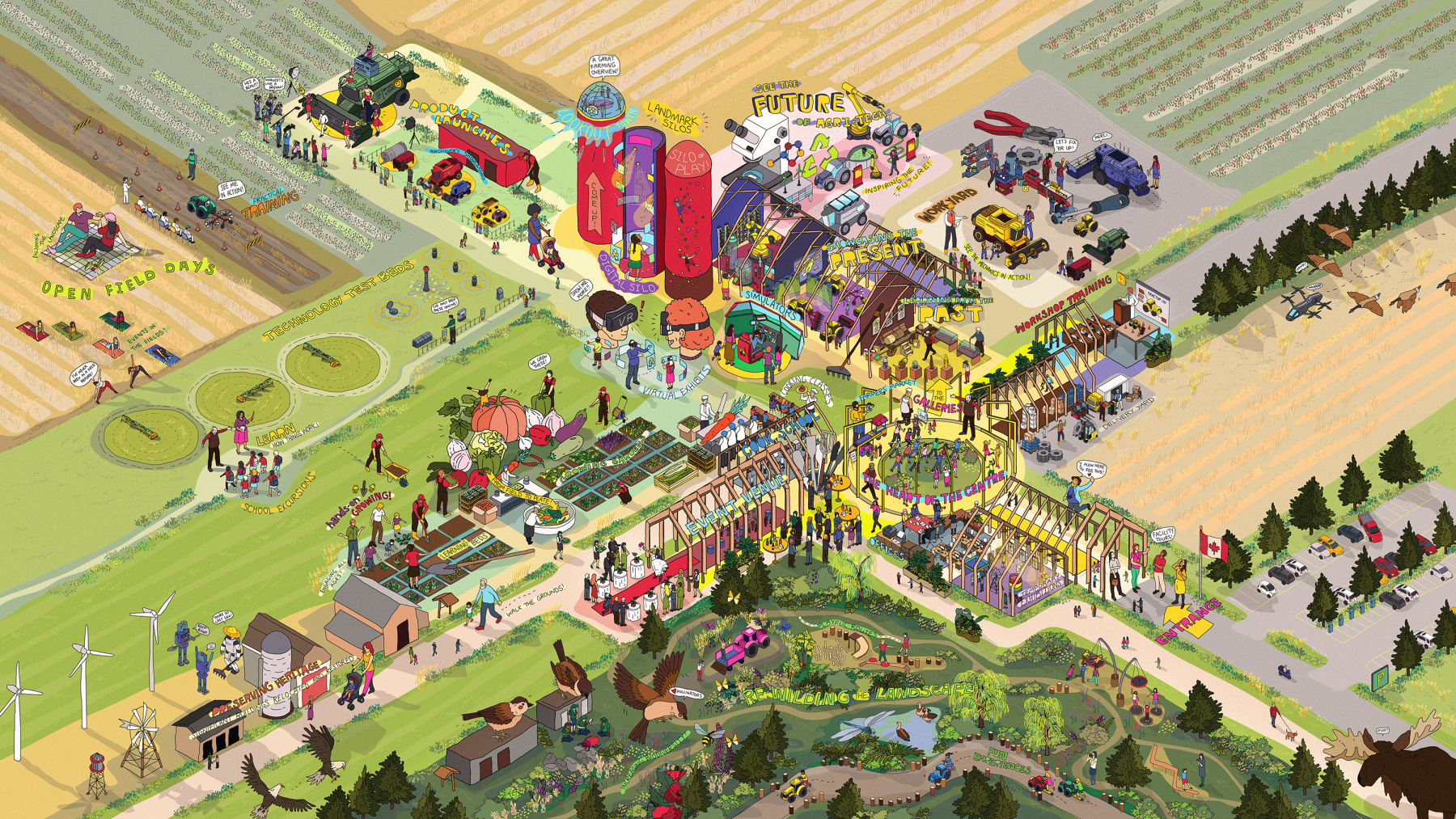
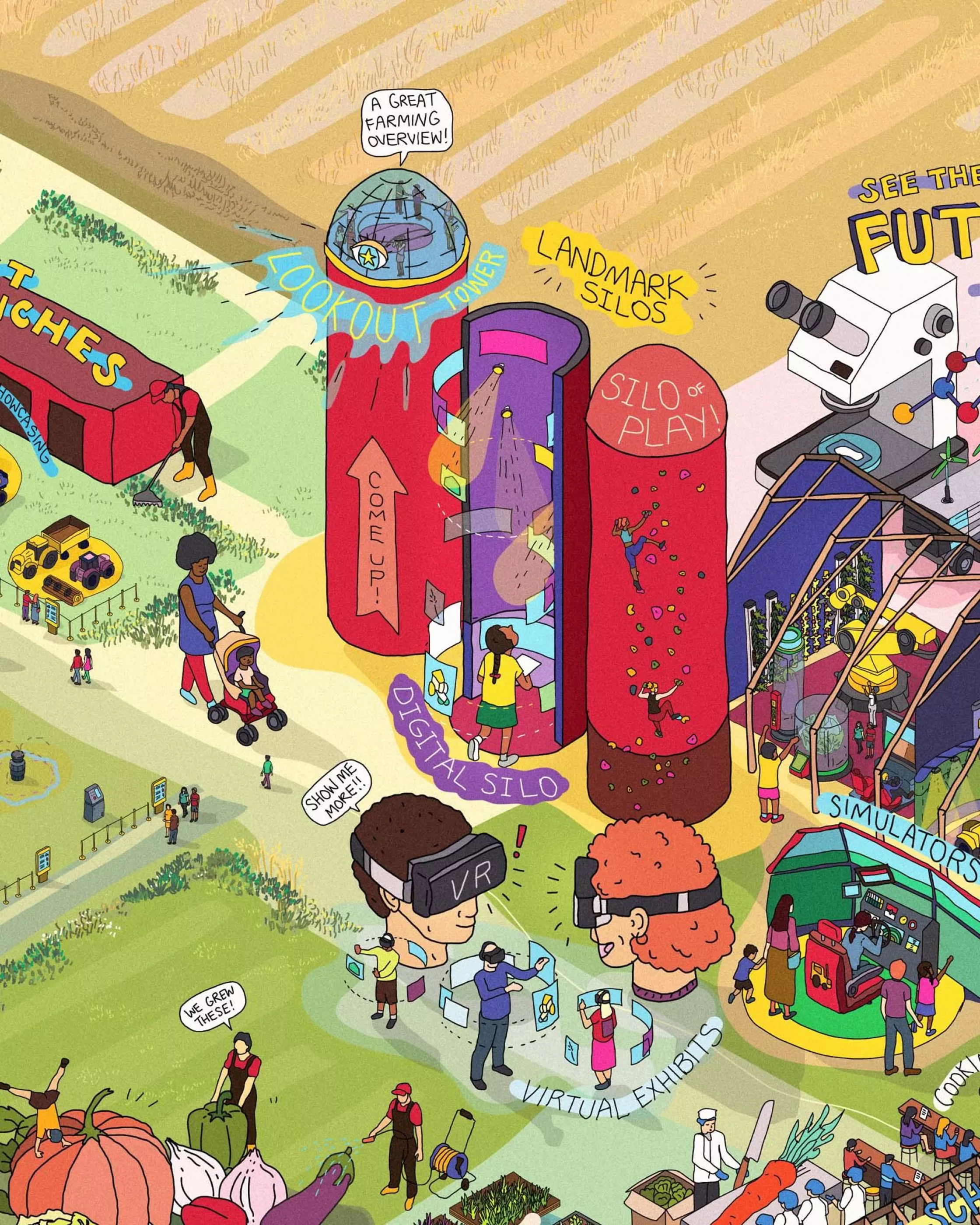
The Landmark Silos: We believe that meaningful design should provoke curiosity and joy. Applying our philosophy of "playful placemaking," the silos are repurposed from functional storage into vehicles for engagement: a “Lookout Tower” for perspective, a "Digital Silo" for immersion, and a "Silo of Play" for interaction.

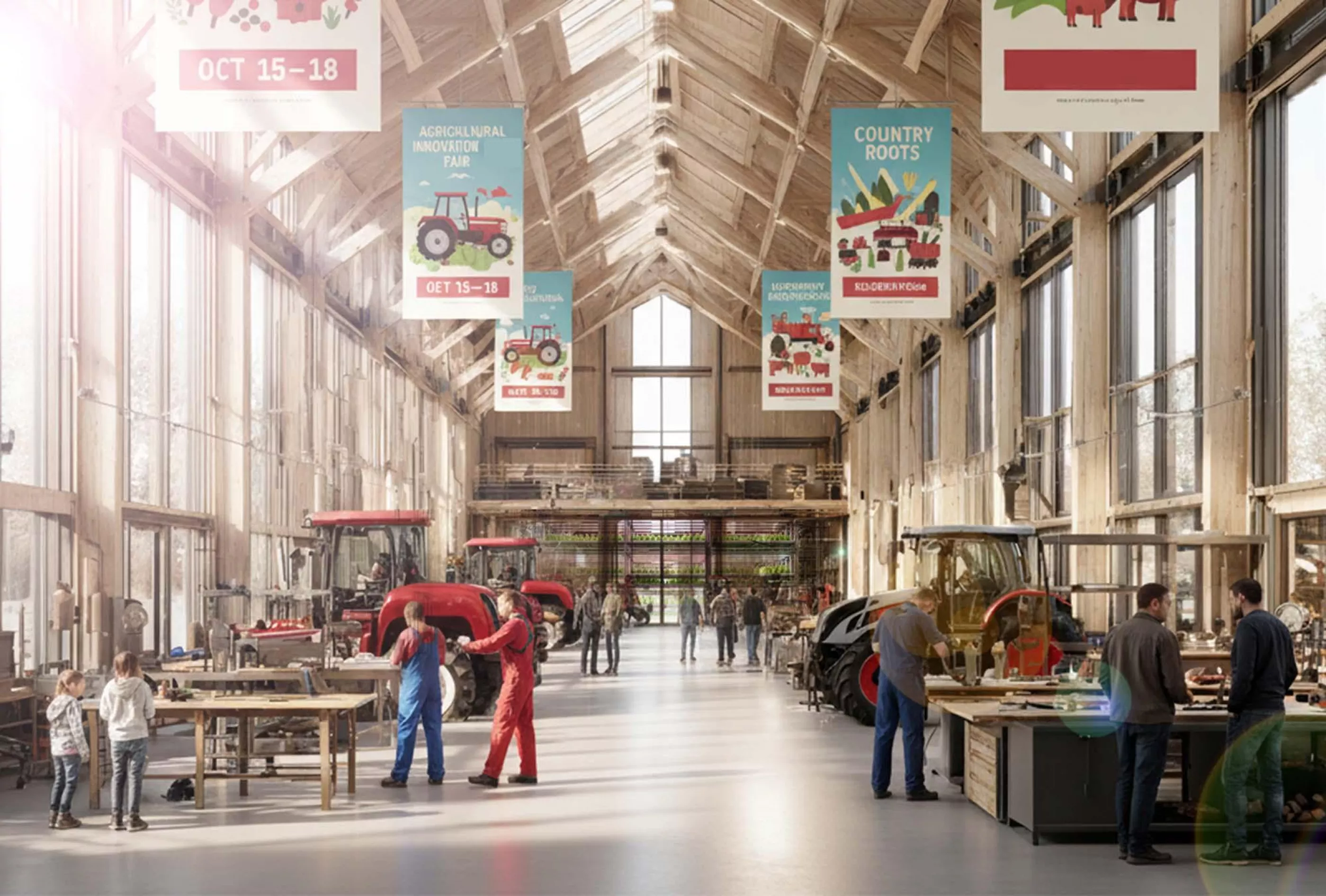
Outside view
Familiar barn silhouettes are reinterpreted in the proposed Agricultural Science Centre
Agri Food Discovery Centre Illustrated Axo Jarrell Crop 2
The three silos have each been given a new purpose.
2. Architecture as an Ecosystem

We approach these projects with a "landscape led" mindset, where buildings and landscapes work together. We view the building and its context not as separate entities (a building sitting isolated within its "red line" boundary), but as an integrated design with direct relationships with its surroundings.

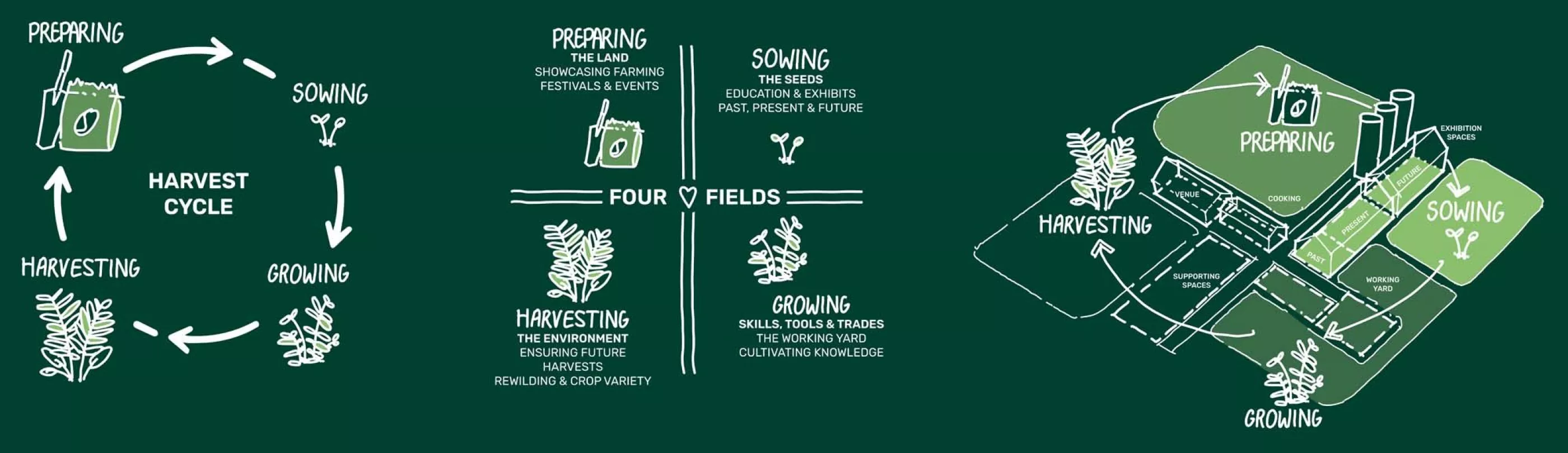
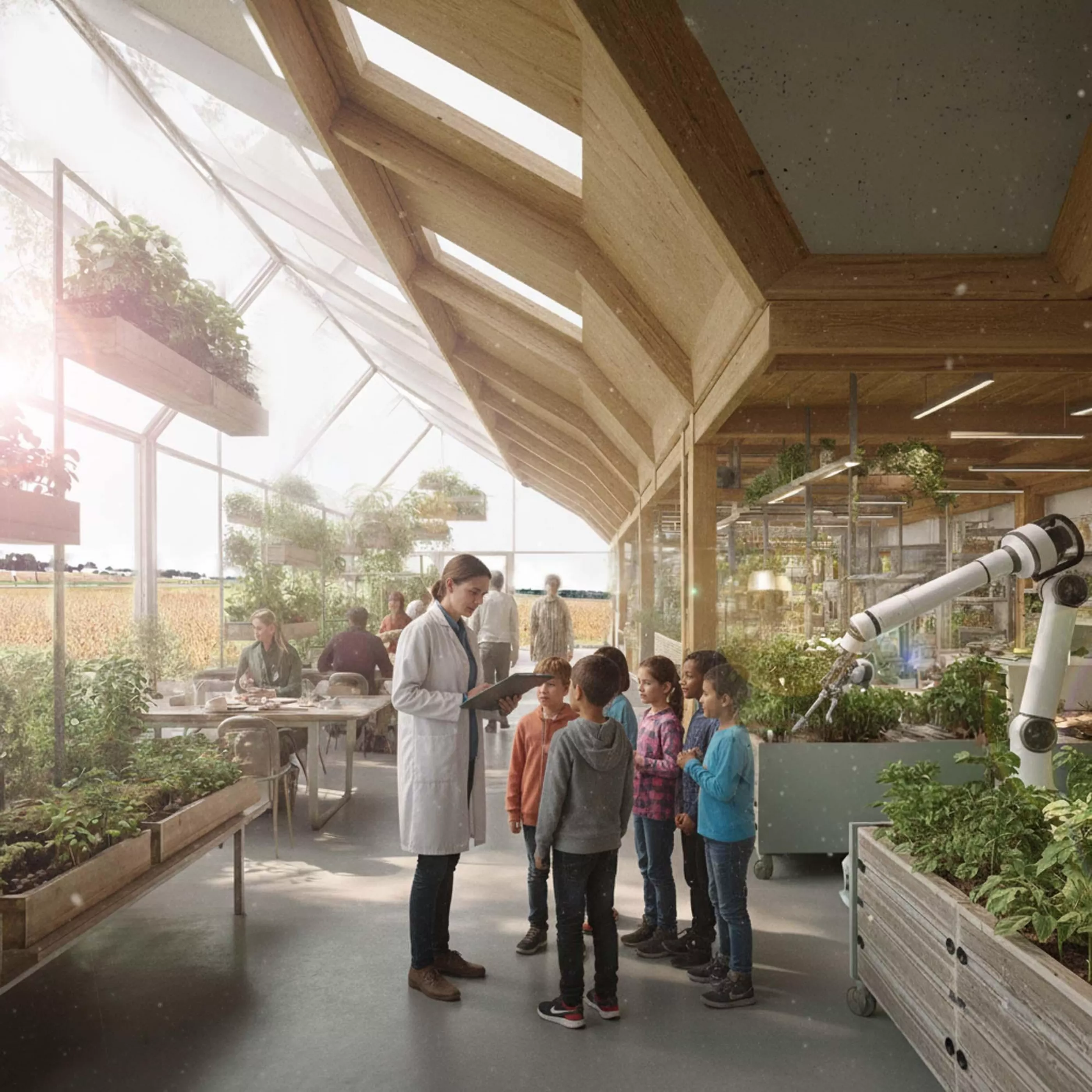
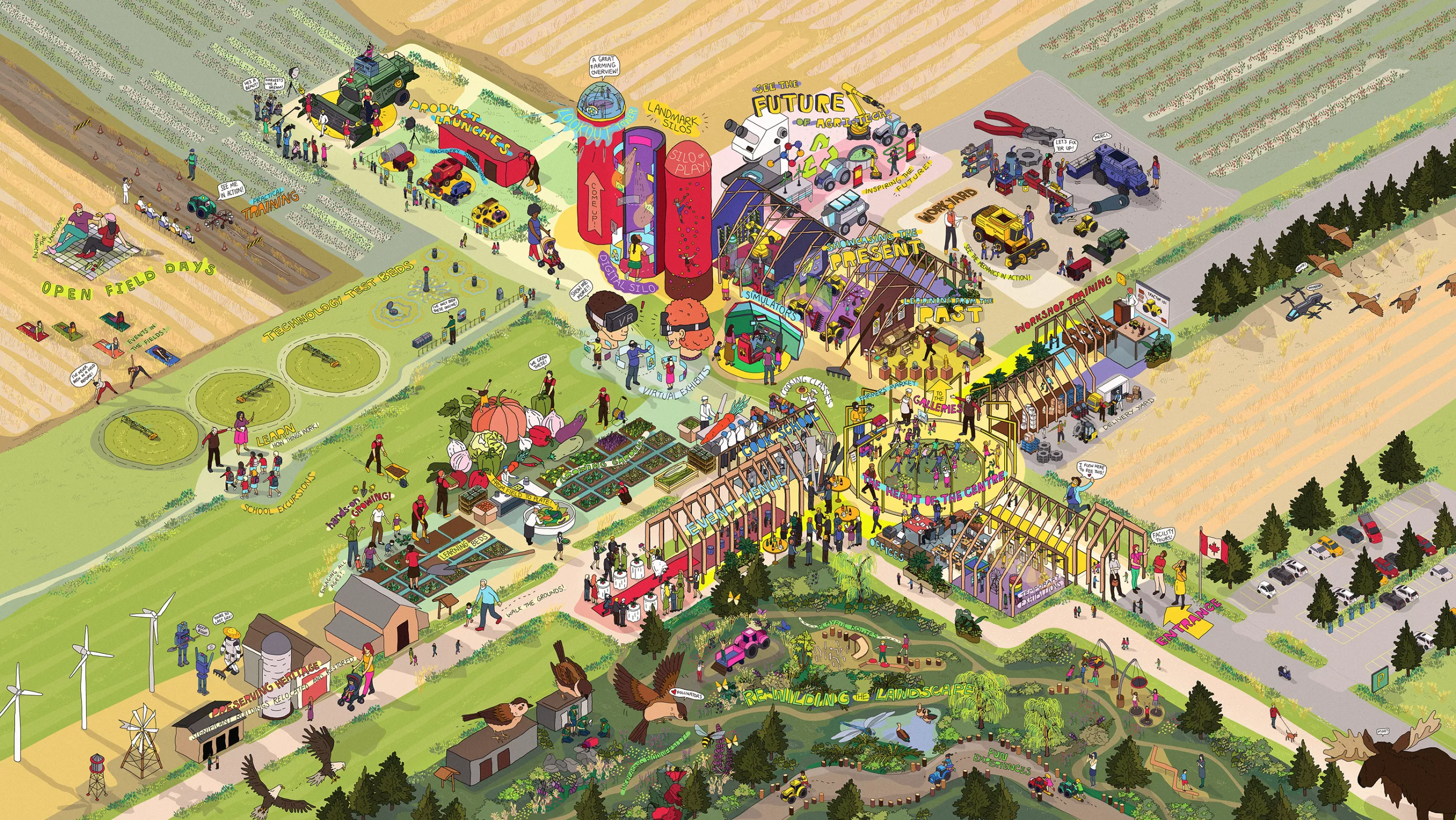
The Four Fields: Drawing inspiration from the agricultural calendar, we proposed organising the Centre around "four fields." This framework structures the building programme by the natural rhythm of growth and harvest, creating a strong narrative link between the internal spaces and the farmland outside.

Circular Systems: We imagine buildings where waste becomes fuel, and water is continuously recycled; a "living lab" where the mechanical systems are exposed and educational.

Four Fields Each of the four fields of the Agricultural Science Centre takes inspiration from a distinct season of the farming cycle.
3. The "Rooted" Methodology

Our design philosophy, which we call being "Rooted," posits that meaningful places must dig deep before they build up.

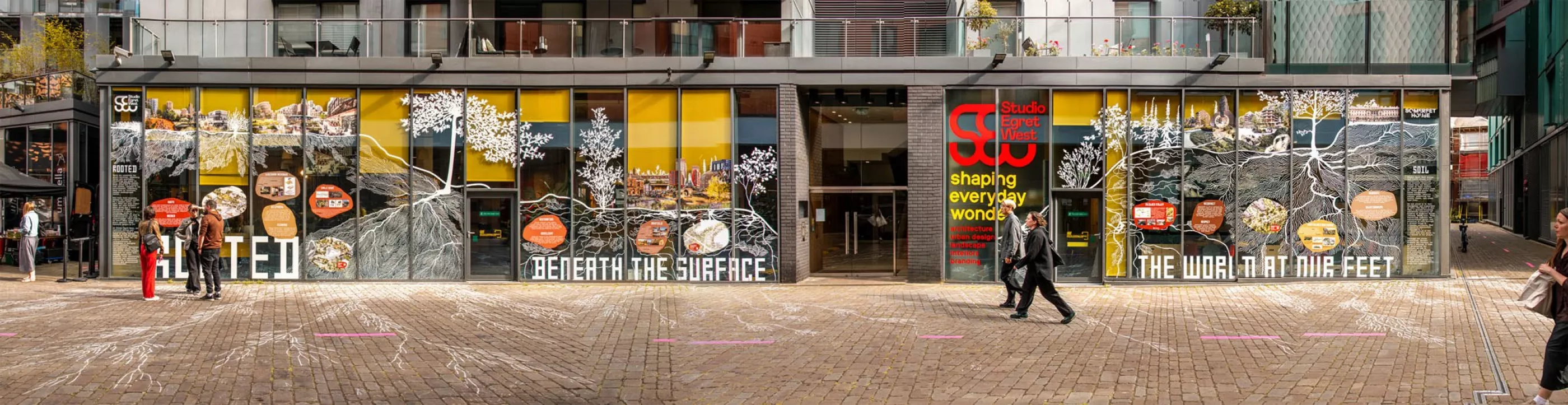
In our collaboration with Somerset House on the Rooted exhibition, we explored how soil does more than anchor plants; it is a hidden source of information and history that contextualises everything that grows within it. We apply this same logic to our architectural process.

Facade Panorama Studio Egret West's Rooted exhibition, exploring how we design places that are rooted in their contexts.
At Studio Egret West, being "Rooted" is key to our approach to design and placemaking. We explore the stories, systems, and conditions that define a place, asking what came before, what matters now, and what connects people to it.”
David West Founding Director

Community Clusters: Just as a healthy soil system requires diversity, a successful agri-food centre requires a diverse network of stakeholders—farmers, scientists, indigenous voices, and local families. Crucially, we have also prioritised intergenerational engagement, ensuring the design actively invites the participation of youth to safeguard the Centre’s future growth.

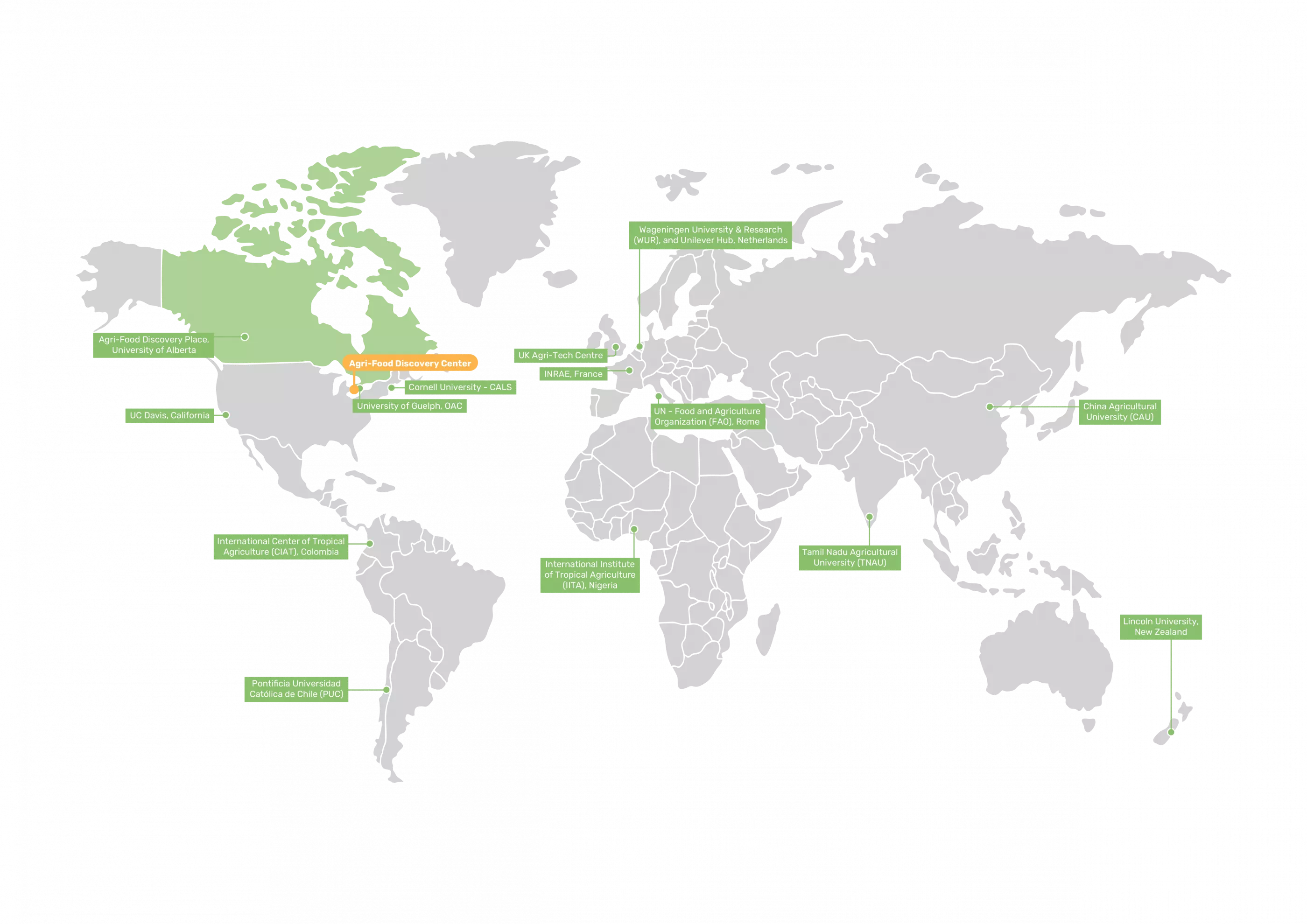
Global Thinking, Locally Grounded: We think of the Centre as part of a global network of successful agricultural and food institutions across the world. In Perth, we see an incredible opportunity to forge partnerships that extend far beyond the site boundary. Our goal is to create a “rooted” community cluster that brings together existing local supporters with new, diverse international stakeholders.

World map 01
Agri Food Discovery Centre Illustrated Axo Jarrell Crop 4
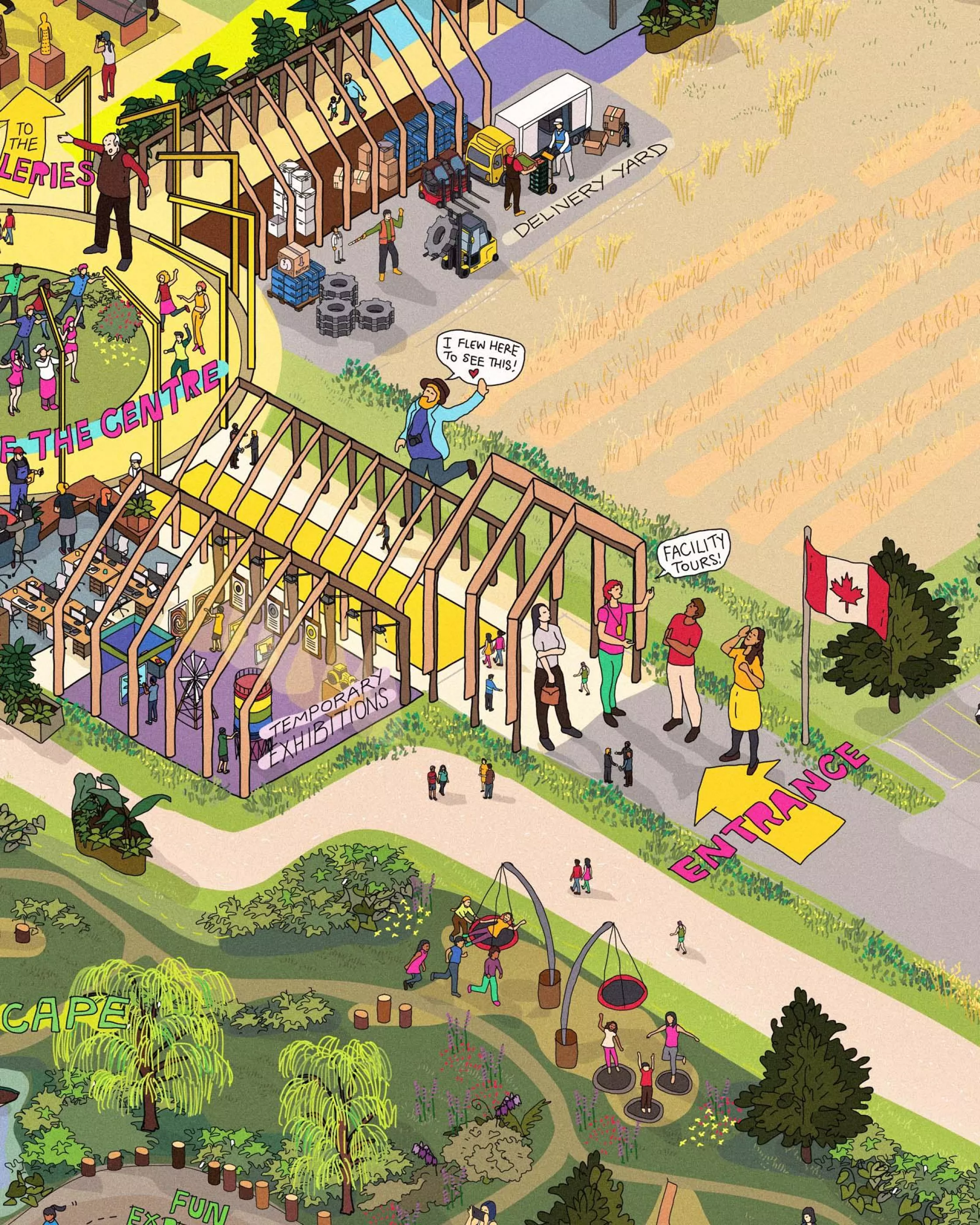
Portal frames and barn architecture form the basis of the building forms.
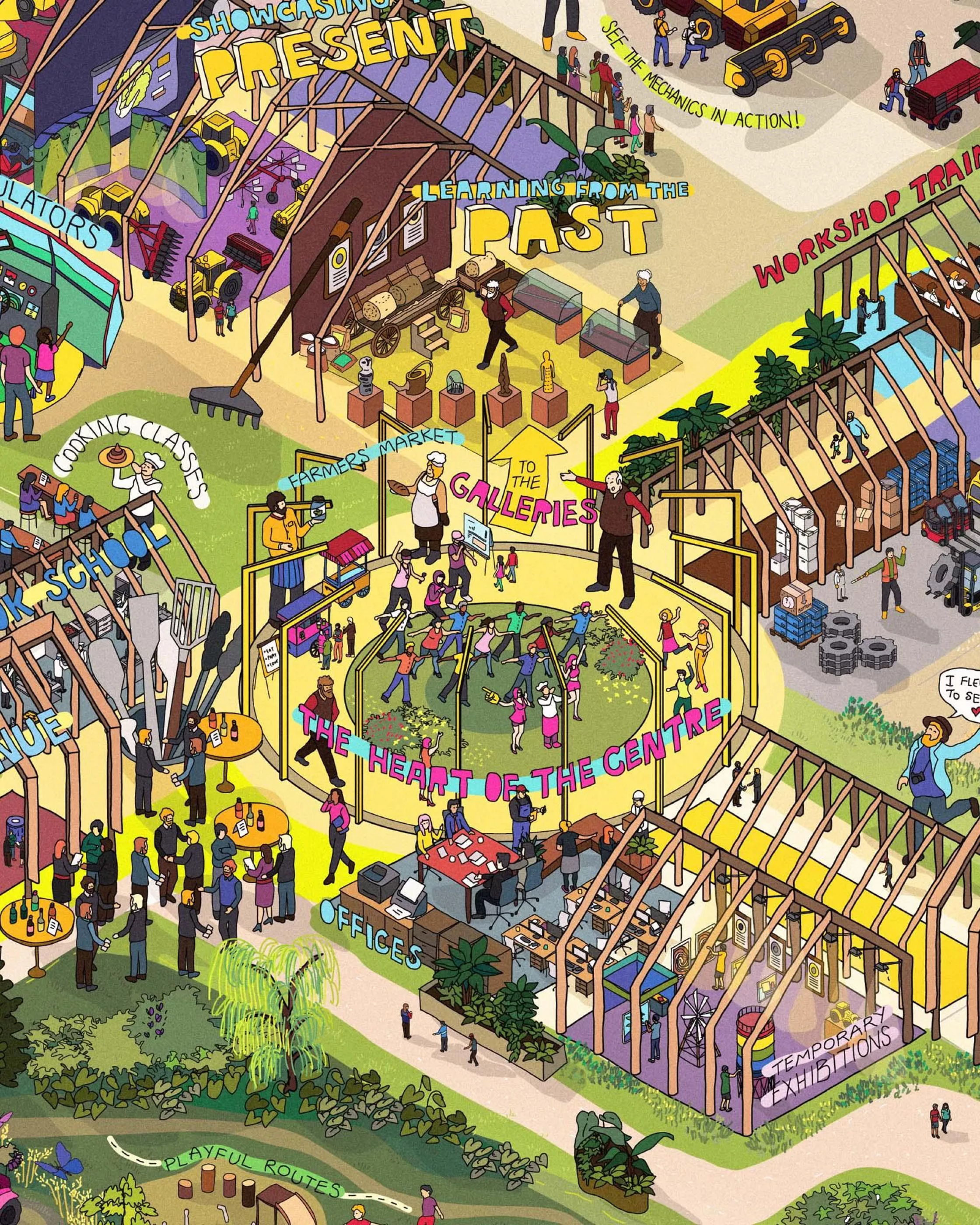
Agri Food Discovery Centre Illustrated Axo Jarrell Crop 3
The different "wings" of the Centre meet in a central round barn.
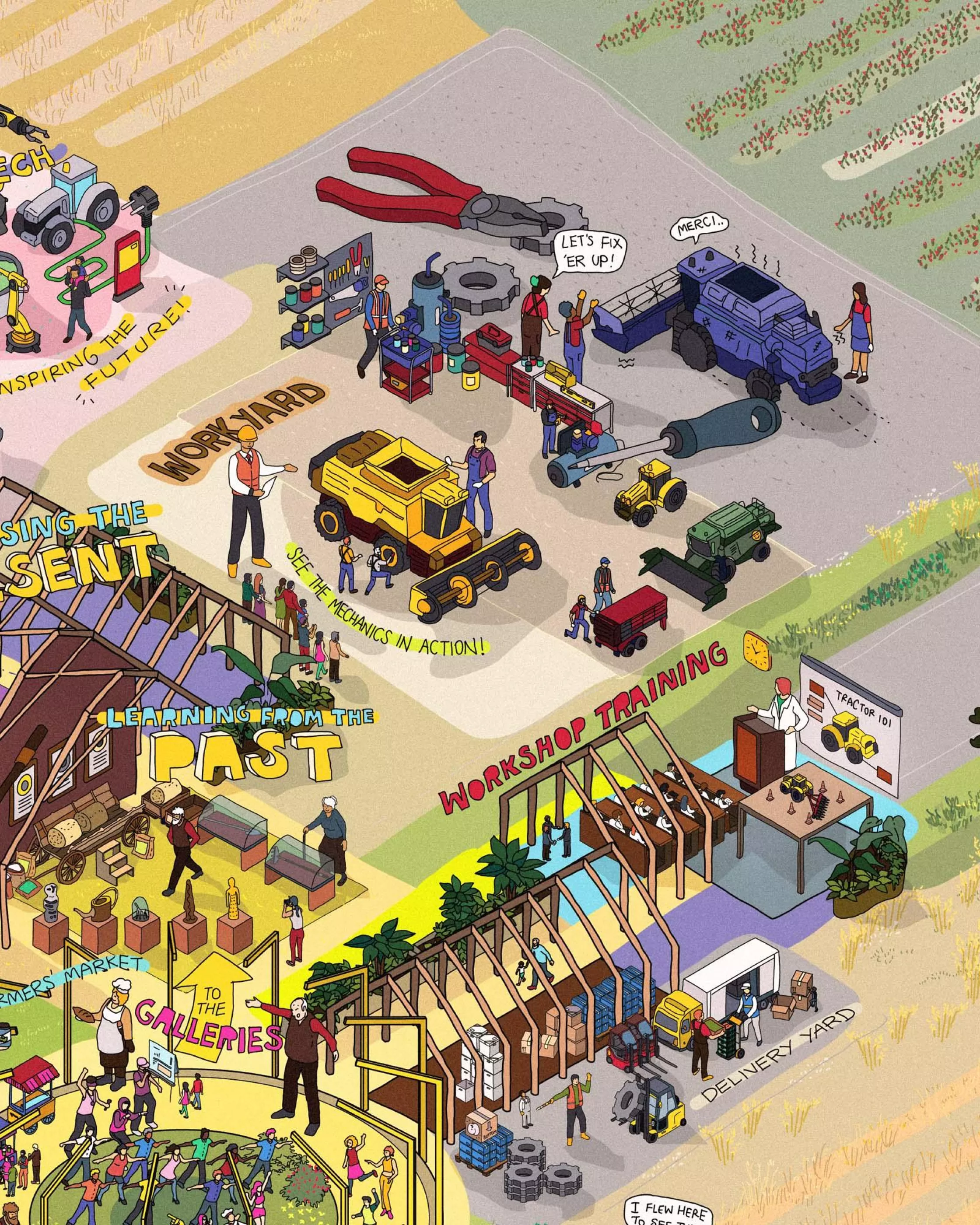
Agri Food Discovery Centre Illustrated Axo Jarrell Crop 7
The Centre caters to a variety of uses, from training classrooms to machinery workyards.
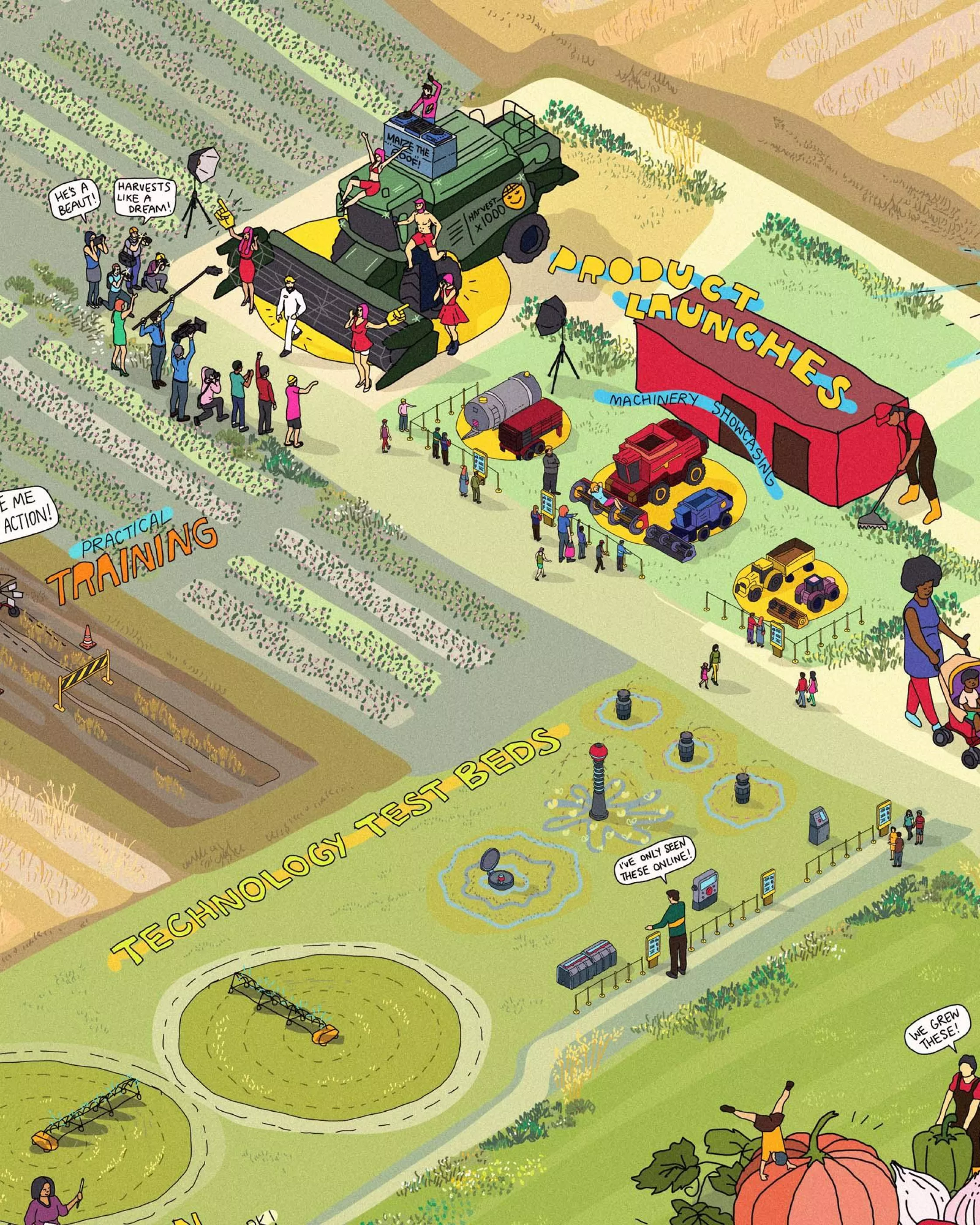
Agri Food Discovery Centre Illustrated Axo Jarrell Crop 6
Activities can spill out into the fields, where launch events and tech showcases can be held.
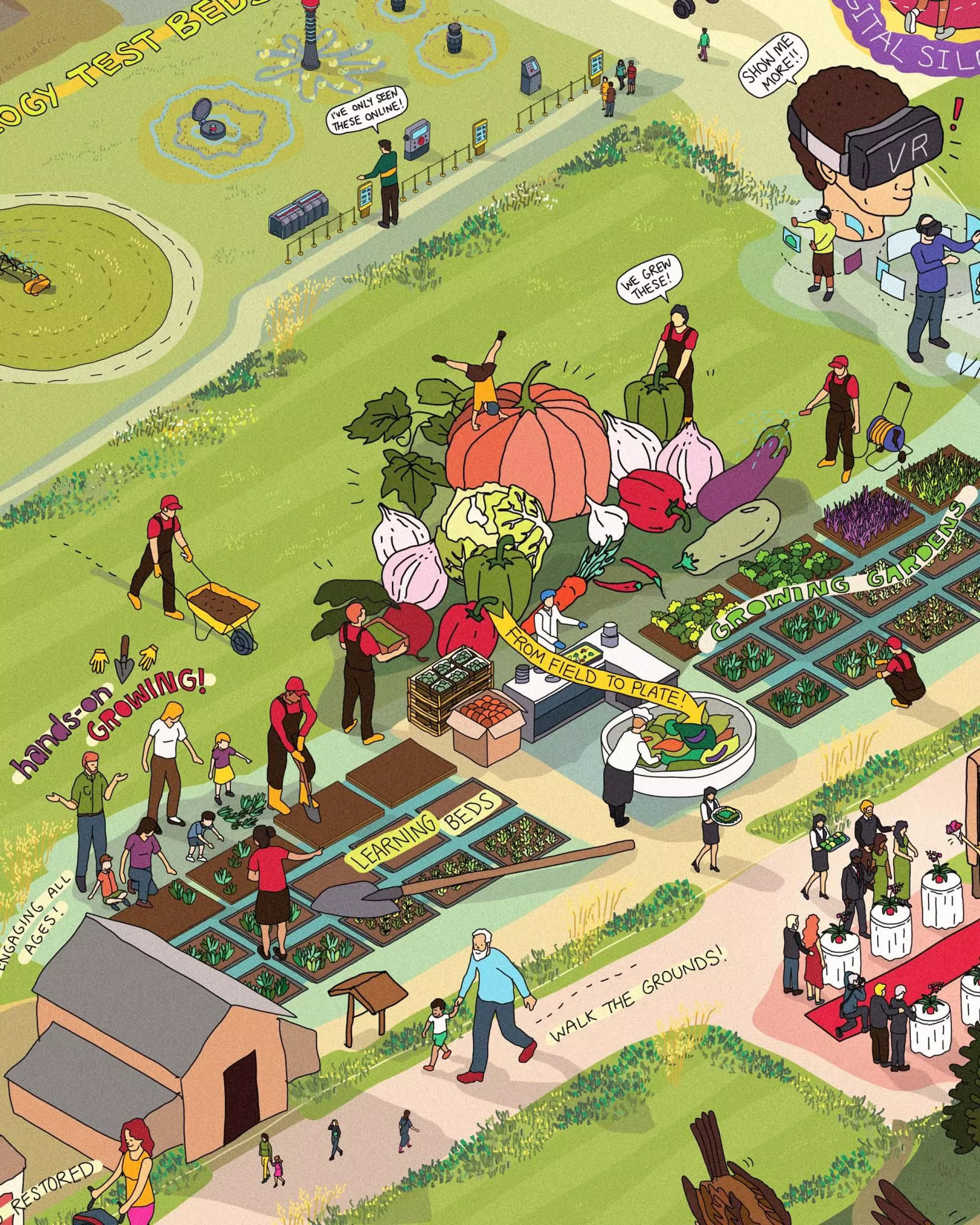
Agri Food Discovery Centre Illustrated Axo Jarrell Crop 1
Hands-on farming experiences and community allotments turn the gardens educational.
4. Beyond the Walls: A Landscape of Invitation

Too often, cultural and scientific institutions feel like fortresses—inaccessible "black boxes" disconnected from their neighbours. We believe a modern Agri-Food Discovery Centre must be the opposite: porous, inviting, and woven into the fabric of the community.

Stitching into the Surroundings: A key design concept of ours is to blur the "red line" boundary. Whether through new pedestrian connections or shared green spaces, the Centre should not sit isolated from its surroundings, but integrated with it, creating a seamless transition between the building and townscape.

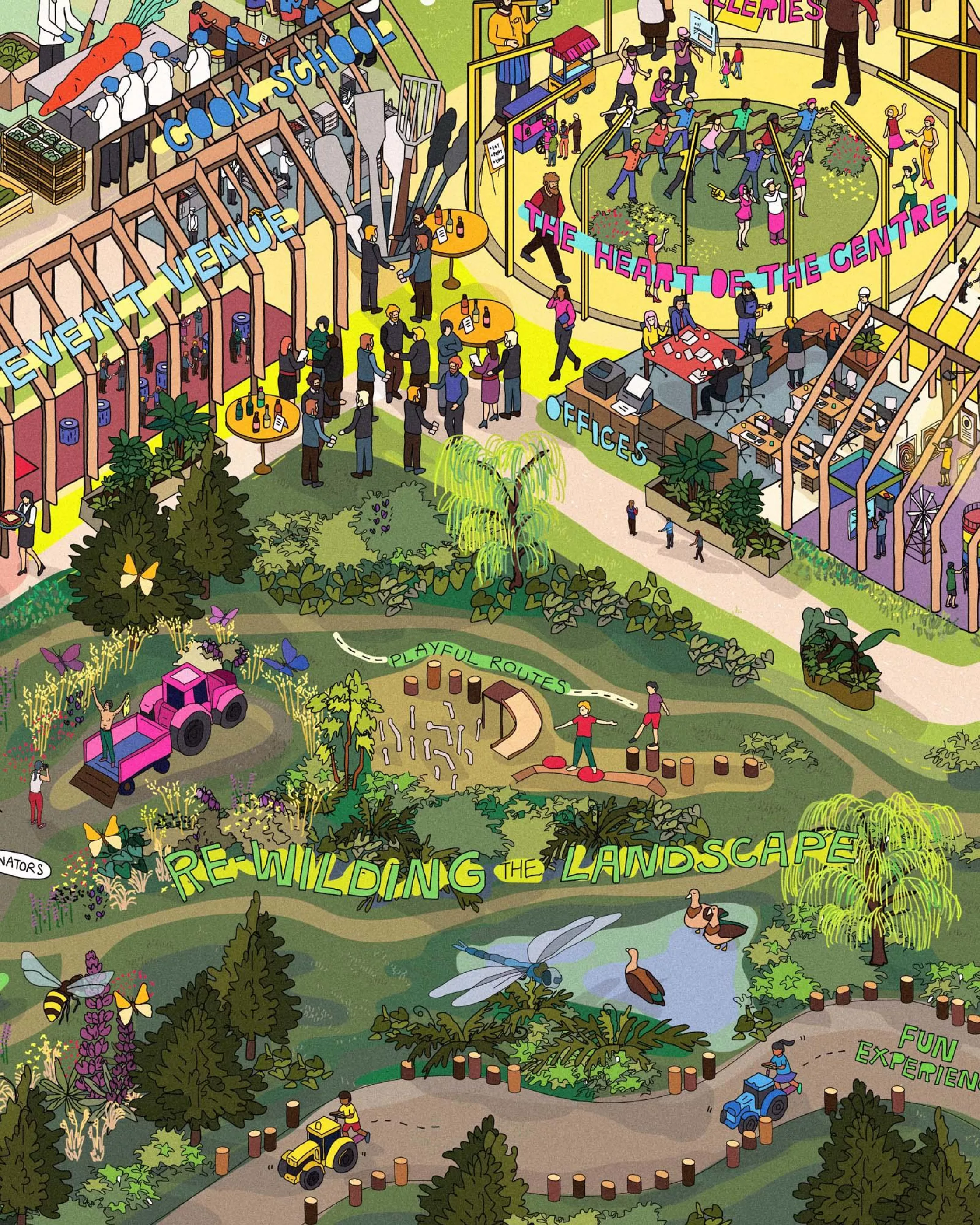
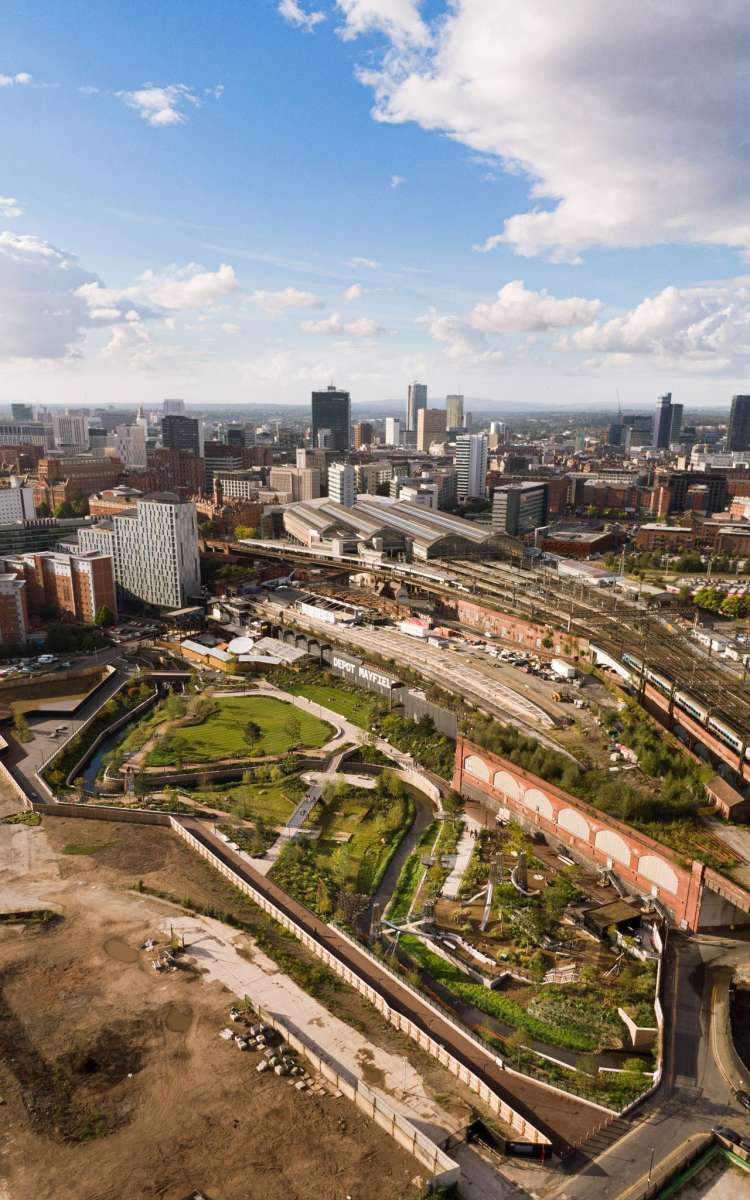
Landscape as a Protagonist: Drawing on our experience delivering Mayfield Park—Manchester’s first new public park in 100 years—we know that high-quality public realm is the catalyst for placemaking. For this project, the landscape becomes the main exhibit: It is a space where the turning of the seasons is celebrated, and where nature serves as the common ground for a new destination space.

Agri Food Discovery Centre Illustrated Axo Jarrell Crop 5 One of the four fields is a rewilded landscape, where food landscapes co-exist with natural foraging, recreation, and biodiversity.
Unearthing the Future

Ontario's Huron Perth Agricultural Science Centre represents a unique opportunity to explore the relationship between people, land, and technology. It is a project that demands we look beneath the surface; just as biological roots are essential for plant survival, we believe architectural roots are essential for meaningful design.

By exploring history, identity, and belonging, we aim to balance poetry with pragmatism, and innovation with heritage, to create a design that is adapted to its unique environment, much like a native plant system.

In doing so, we create a destination that not only displays the future of food, but—anchored by deep cultural and contextual roots—actively helps grow and further the industry.


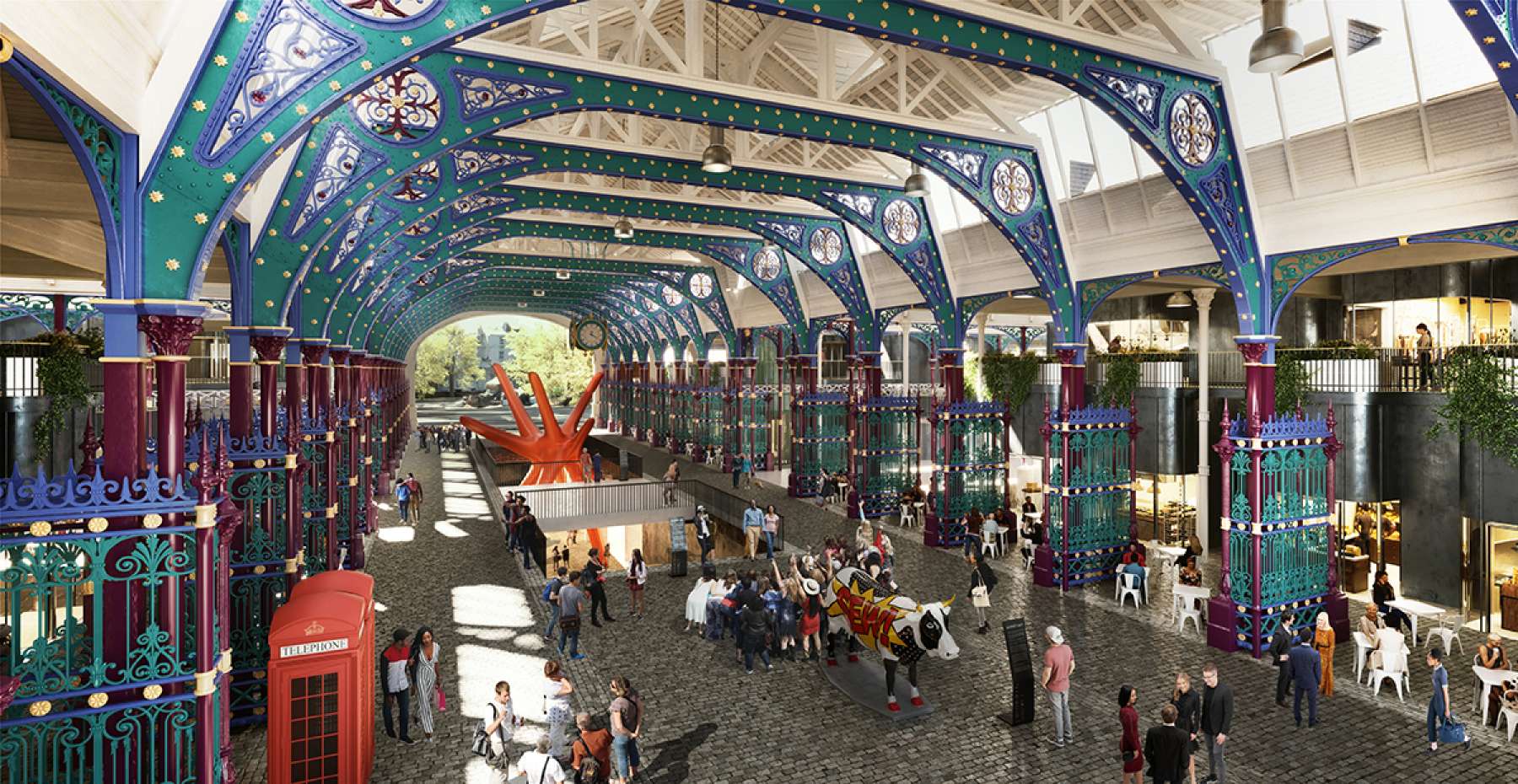
We are energized by the opportunity to contribute to this nationally significant cultural centre. To learn more about our work in the agri-food sector, visit our online Food For Thought and Rooted research pieces, or see how we have reimagined London's iconic Smithfield meat market as a new Food Hub for the city.

221122 Food For Thought Exhibition Studio Egret West 7 Studio Egret West's Food For Thought exhibition interrogates how cities can help increase food production through urban farming.

Share

Cultivating Place: A “Rooted” Design for Canada's New Agricultural Science Centre

Close