A heritage-led regeneration at the southern gateway to Fish Island, stitching together Edwardian industrial fabric with contemporary living and working spaces.
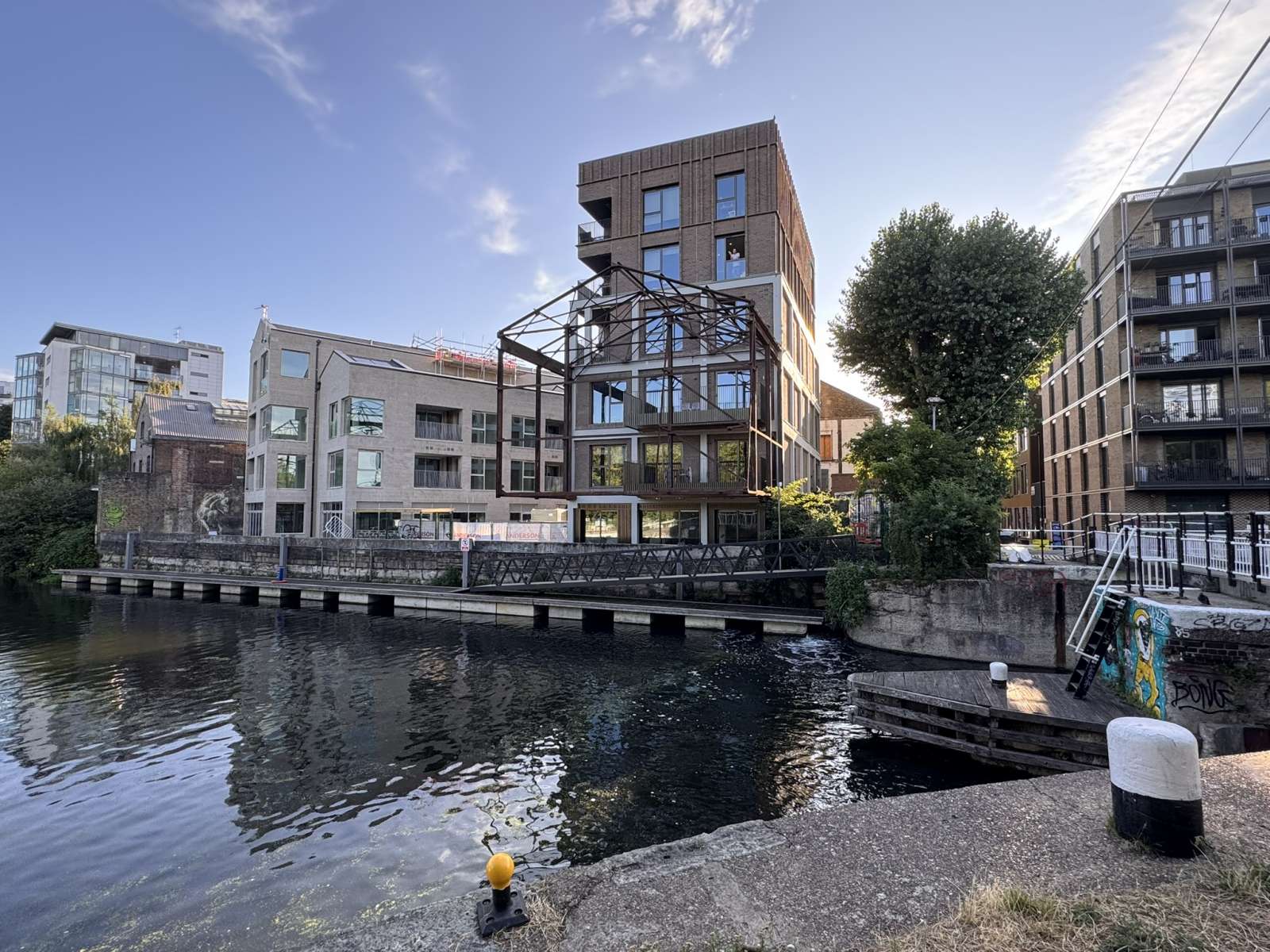
Located at the southern edge of the historic Fish Island Conservation Area, 60 Dace Road (historically known as Swan Wharf) marks a strategic transition point between the established industrial streets of Tower Hamlets and the Queen Elizabeth Olympic Park. Formerly a site for light industrial warehouses and a stable for dray horses, the area is defined by a robust cluster of late 19th- and early 20th-century factory buildings. The site sits at the confluence of the River Lea and the Old Ford Lock, offering a unique waterfront setting that has directly informed our design approach.
Specificity
The project transforms a restricted, underutilised brownfield site into a vibrant mixed-use quarter. The scheme balances respect for Fish Island’s industrial heritage with the delivery of modern, high-quality homes and affordable workspace. By peeling back layers of historical alteration and dilapidation, the design reveals the value of the existing fabric while introducing new layers that respond to the evolving context of Hackney Wick.
A Family of Buildings
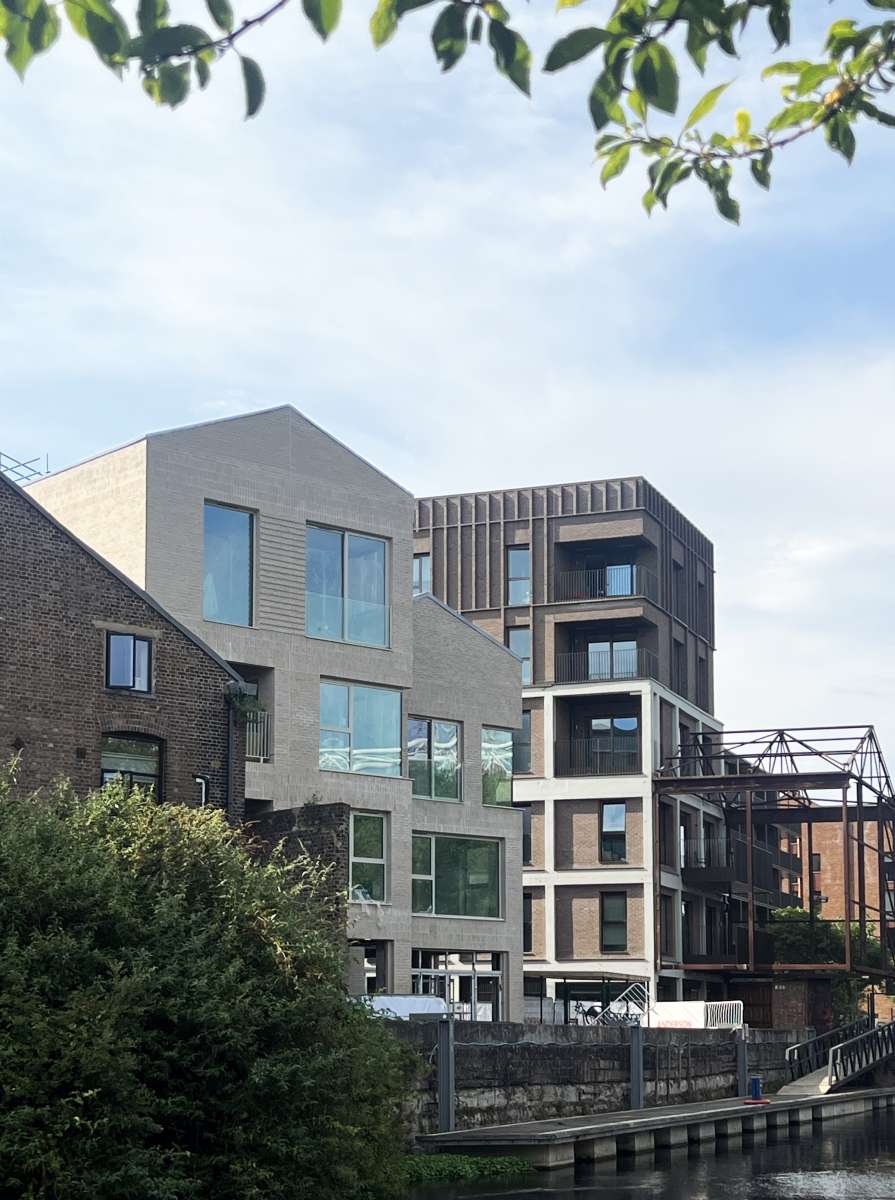
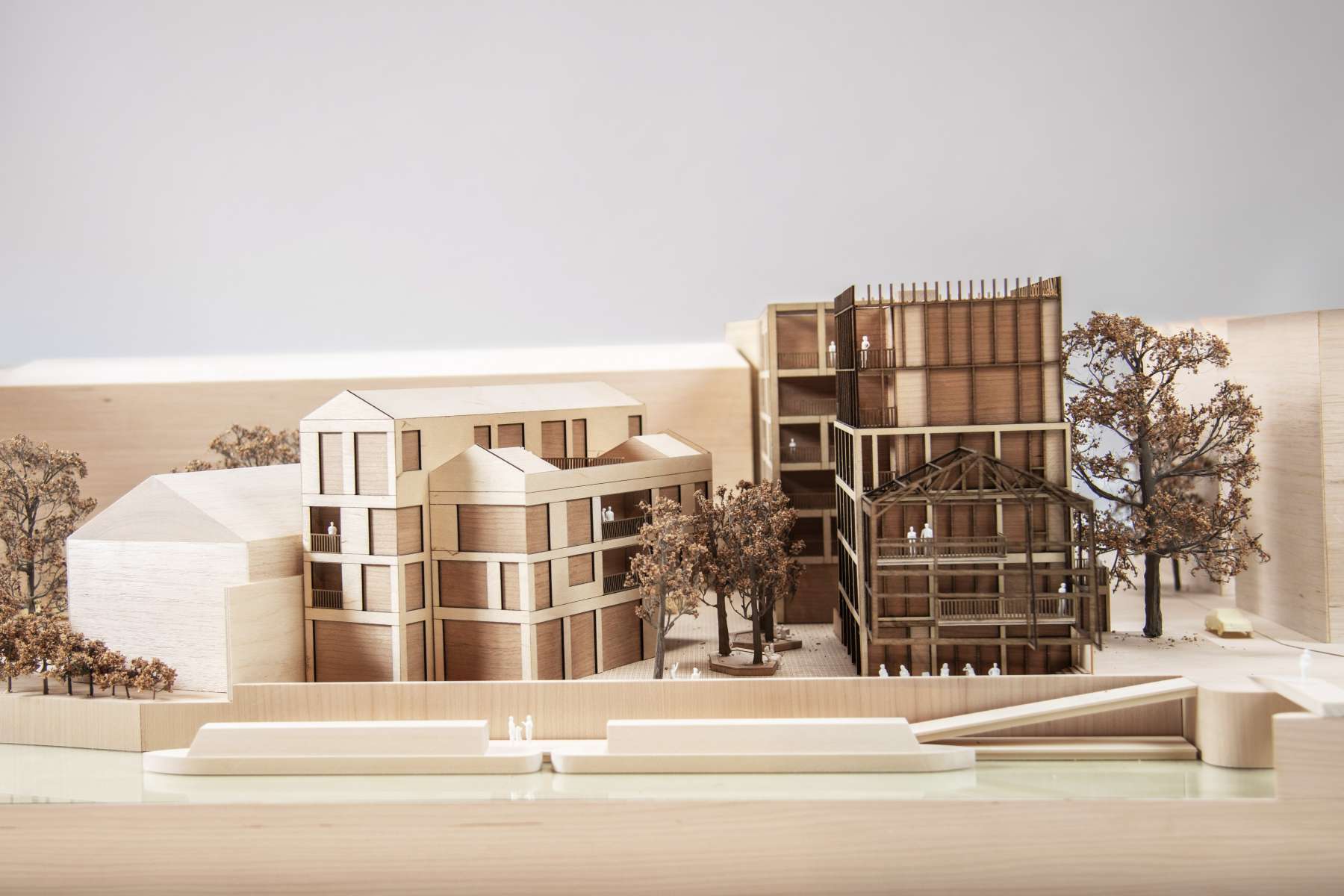
The development is composed of four distinct elements arranged around a central courtyard, creating a diverse architectural grain that echoes the ad-hoc nature of the area. The scheme combines sensitive retrofit with bold new interventions:
The Stable Block: We retained the Edwardian stable building in its entirety, restoring the street frontage and re-opening bricked-up windows to reactivate Dace Road. A later link building was removed to reveal the hidden eastern gable, healing the historic form. Inside, innovative duplex typologies feature internal winter garden courtyards to resolve light and ventilation within the deep industrial plan.
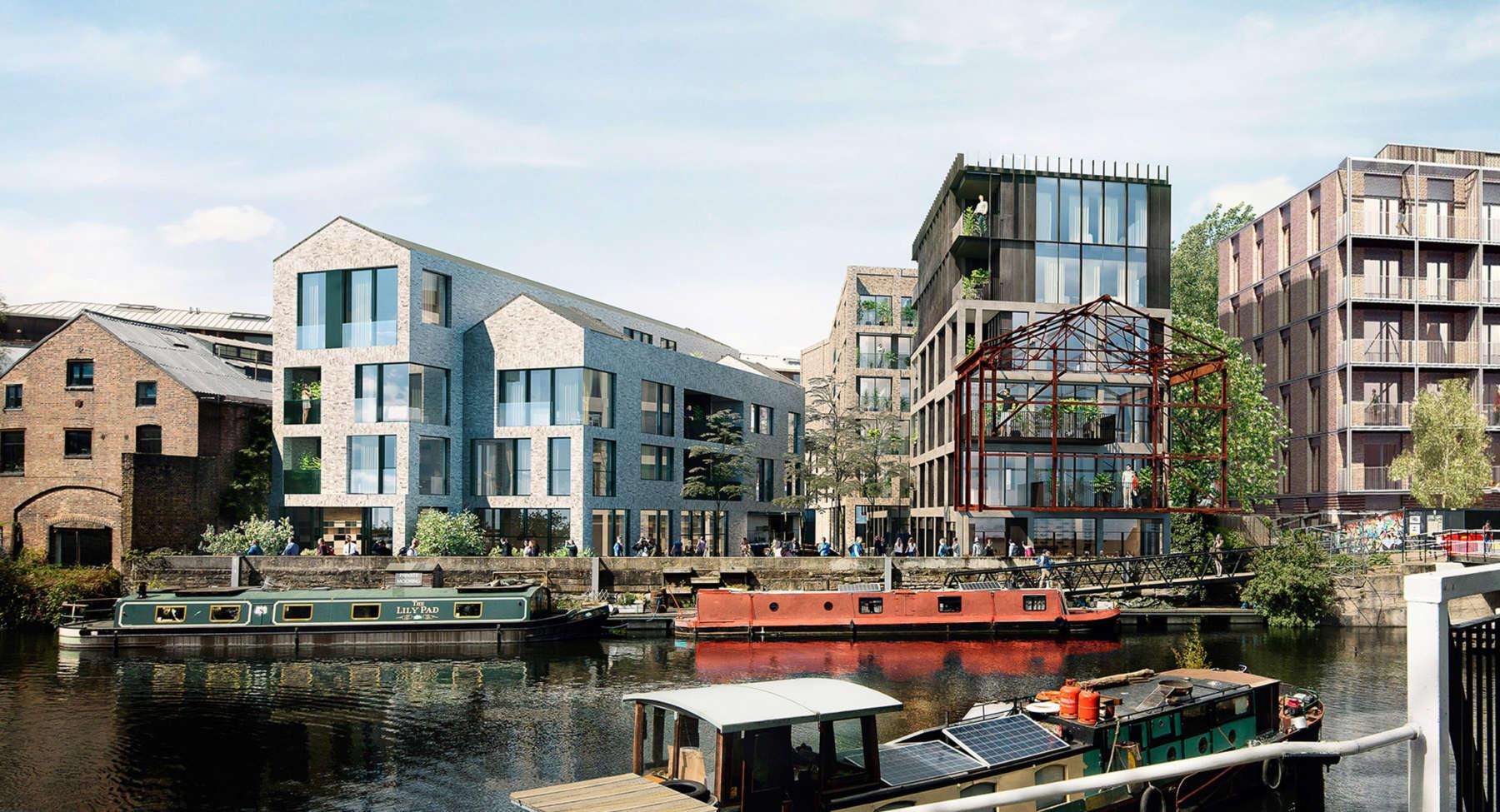
The Warehouse: This mid-century concrete-framed building has been repurposed, retaining its robust superstructure. A striking two-storey rooftop extension acts as a new "insertion," featuring dark bronze metal cladding and a rhythmic grid that contrasts with the existing concrete grid. The industrial steel lifting frame, a marker of the site's history, has been carefully restored to overhang the canal.
The Wharf Building: Anchoring the waterfront, this new-build element responds to the scale of the neighbouring Crown Wharf with a staggered, gabled form. Clad in light buff brick with generous corner windows, it frames panoramic views across the canal and provides a visual bookend to the site.
The Courtyard Building: Sitting behind the Stable Block, this new addition is defined by an "expressed frame" and a calm composition of repeated elements. Facing the internal courtyard, it utilises a mid-buff multi-stock brick and dark petrol blue metalwork to complement the tones of the heritage assets while asserting its own distinct identity.
The Courtyard
The scheme is stitched together by an intimate central courtyard that opens the canal edge to the public. Inspired by the "unpolished" character of Hackney Wick, the landscape employs industrial materials such as tumbled stone cobbles, corten steel, and timber. Raised platforms act as social spaces and incidental play "islands," while ground-floor affordable workspaces and a café spill out into the yard, creating an active social heart for residents and the creative community.
Awards